
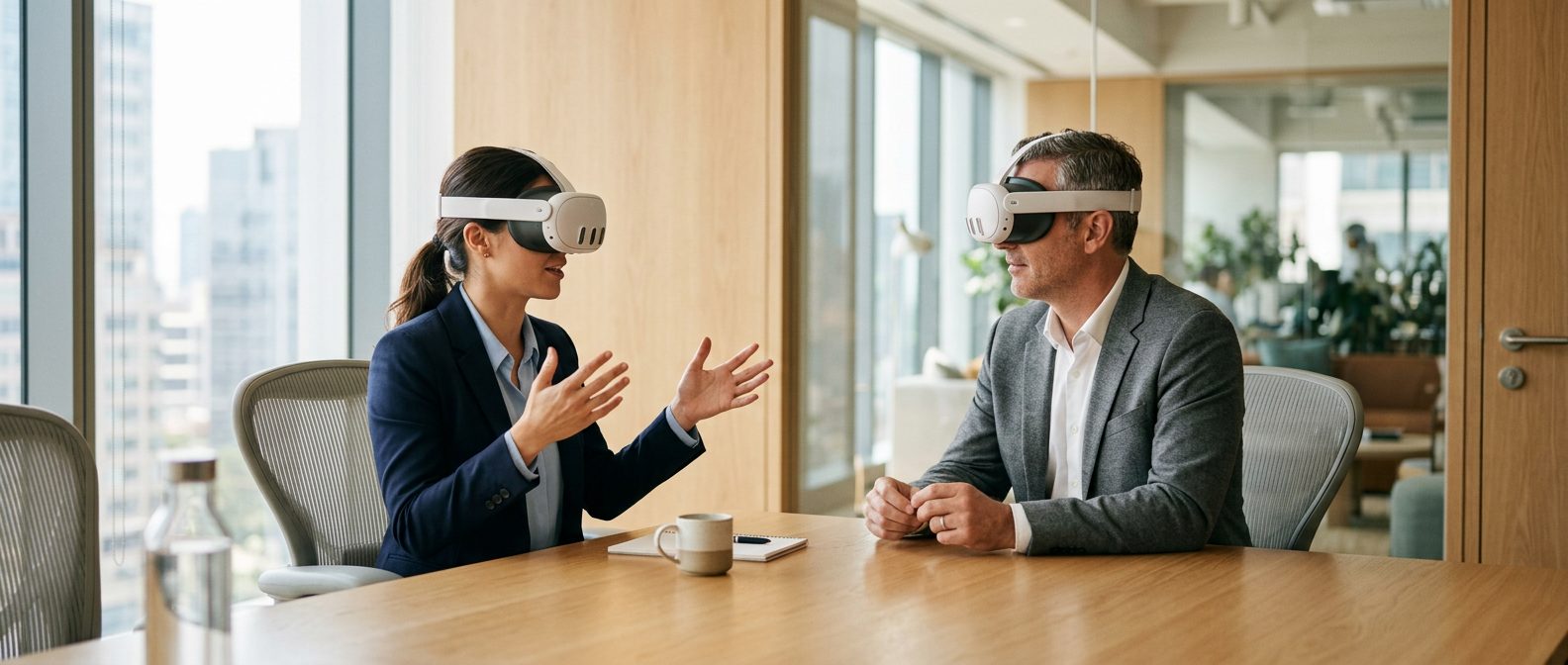
A new manager steps into a meeting room. Across the table sits an employee on the edge of burnout. The conversation could go a dozen ways — and most of them wrong. In a classroom, a facilitator runs this scenario once, awkwardly, in front of peers.
With VR leadership training, that same manager practices it ten times before the real conversation ever happens. PwC found these learners completed training 4x faster than their classroom peers and felt 275% more confident to act on what they’d learned.
That confidence gap matters. Leadership isn’t a set of facts you memorize. It’s a set of behaviors you repeat until they stick.
Key Takeaways
- VR learners are 275% more confident applying new skills compared to classroom and e-learning participants (PwC, 2020).
- 97% of Bank of America pilot participants felt more comfortable performing leadership tasks after VR training.
- VR reaches cost parity with classroom training at 375 learners and becomes 52% cheaper at scale (3,000+).
- Two-thirds of L&D leaders surveyed by HBR had already implemented or planned VR soft skills programs by 2021.
- 70% of Walmart’s VR learners outperformed non-VR peers on skills assessments.
What VR Leadership Training Actually Looks Like
Put on a headset. You’re standing in a private office. A direct report sits across from you, arms crossed. They’ve missed three deadlines this quarter. Your job: start a coaching conversation without putting them on the defensive.

(Illustrative representation of a VR coaching session)
You speak. The avatar responds with body language, tone shifts, even pushback. If you open too aggressively, the conversation spirals. If you ask the right question at the right moment, the employee opens up about a workload problem nobody knew about.
Then you take off the headset, review what happened, and try again.
That loop — practice, feedback, retry — is what separates VR soft skills training from every other format.
- Classroom: one attempt in front of an audience.
- E-learning: a multiple-choice quiz.
- VR: a private rehearsal space where mistakes carry no consequences and repetition is instant.
DDI, one of the world’s largest leadership consulting firms, built exactly these scenarios with Strivr. Their focus: inclusion, coaching conversations, and emotionally charged leadership moments. As DDI’s Verity Creedy put it: “People call leadership skills ‘soft skills,’ but they’re actually some of the hardest stuff to do. That’s where I find VR incredibly exciting.”
Why Traditional Leadership Training Falls Short
Most companies already invest in leadership development. The problem isn’t effort. It’s format.
Classroom workshops compress a full day of content into a single sitting. Participants listen, discuss, maybe role-play once. Then they return to their desks and forget 80% of it within a week. E-learning stretches the timeline but loses the emotional weight. Clicking through slides about “active listening” doesn’t teach you to listen actively.
PwC tested this head-to-head. They ran identical inclusive-leadership content — the same material, the same objectives — across classroom, e-learning, and VR with new managers at 12 US locations. The VR group was 3.75x more emotionally connected to the content than classroom learners and 4x more focused than e-learning peers. Emotional engagement drives retention. Retention drives behavior change. That’s the chain traditional formats keep breaking.
The economics tell a similar story:
| Scale | VR vs. Classroom Cost |
|---|---|
| < 375 learners | VR costs more per learner |
| 375 learners | Cost parity |
| 3,000+ learners | VR is 52% cheaper |
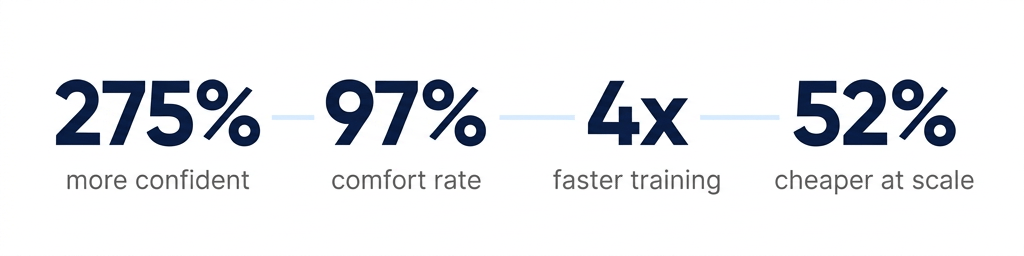
For enterprise rollouts, the math tips decisively toward VR.
Real Companies Already Doing This
This isn’t a pilot-stage technology anymore. Fortune 500 companies have moved past experimentation.
Bank of America became the first financial services firm to deploy VR training across nearly 4,300 financial centers. Their focus: navigating difficult conversations, listening with empathy, and strengthening client relationships. In the pilot, 97% of 400 employees said they felt more comfortable performing tasks after VR training. The bank expanded its VR training program from an initial 50,000-employee rollout to over 200,000 participants. John Jordan, Head of The Academy, described it simply: “The trainings help you look for cues, ask better questions and literally put yourself in someone else’s shoes.”
Accenture onboarded more than 150,000 employees through their enterprise metaverse, training skills from sales conversations to giving and receiving feedback. The program earned a 94% favorability rating. Accenture’s Olly Jeffers explained the advantage: “When you put the VR headset on, you remove all distractions. On a normal call, message alerts are firing off.”
Walmart saw 70% of VR learners outperform non-VR peers on skills assessments, with 30% higher employee satisfaction scores and 10-15% higher knowledge retention. At that scale, even single-digit improvements add up to significant operational value.
Hilton reportedly compressed a leadership training module from four hours to twenty minutes, with 87% of trainees changing their on-the-job behaviors — figures widely cited in industry coverage, though originally surfaced through Meta-sponsored content.
NC State’s Shelton Leadership Center uses VR scenarios that let participants experience intergenerational workplace conflict from multiple perspectives — stepping into the shoes of both the junior employee and the senior leader. The program is fully integrated into their leadership curriculum.
Where VR Soft Skills Training Works Best
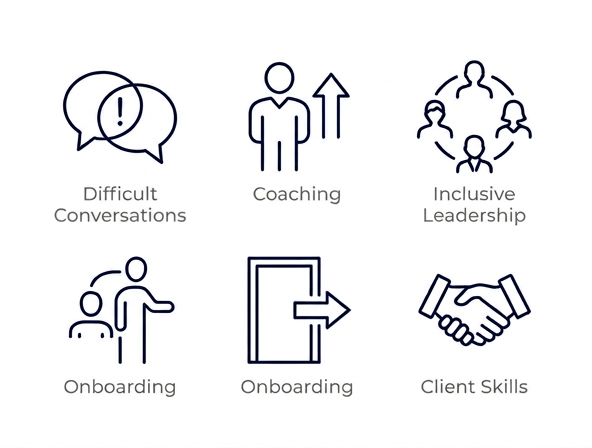
Not every training topic benefits equally from VR. The sweet spot is anywhere emotions, perspective, and practice matter more than information transfer. For most teams, difficult conversations are the highest-impact starting point.
Difficult conversations. Giving critical feedback. Delivering bad news. Addressing underperformance. These conversations are high-stakes and unrepeatable in real life. VR lets managers rehearse them until the words feel natural.
Coaching and mentoring. Effective coaching requires reading the room — noticing hesitation, adjusting your approach, asking follow-up questions. VR builds that instinct through repetition in realistic scenarios.
DEI and inclusive leadership. PwC’s anchor study focused specifically on unconscious bias and inclusive leadership. VR’s ability to create emotional connection — 3.75x stronger than classroom — makes it especially effective for content that requires empathy, not just awareness.
Onboarding new leaders. The first 90 days in a leadership role are the most disorienting. Virtual reality onboarding can compress months of trial-and-error into hours of structured practice. Accenture proved this works at massive scale.
Client-facing skills. Bank of America trained relationship-building and empathetic listening — skills that directly affect revenue. When the training environment feels real, the transfer to real client interactions is stronger.
Getting Started with VR Leadership Training
If your team already meets in VR, your meeting room is already a training room. The environment where you collaborate is the same environment where managers can practice.
Here’s a practical path:
Start with one use case. Pick the leadership skill that causes the most visible pain — usually difficult conversations or new-manager onboarding. A focused pilot generates clearer results than a broad rollout.
Choose the right environment. The best VR corporate training happens in spaces designed for professional collaboration. With a headset-first platform like [raum.app](raum.app product URL placeholder), coaching sessions, role-plays, and feedback conversations happen in the same immersive rooms where your team already works — no context-switching between “the meeting tool” and “the training tool.”
Measure what matters. PwC measured confidence to act. Bank of America measured comfort performing tasks. Walmart measured assessment scores. Pick a behavioral metric, not just a completion rate.
Scale deliberately. VR training hits cost parity with classroom at 375 learners. If your initial cohort is smaller, that’s fine — the confidence and retention gains justify the per-learner premium. As you scale, the economics only improve.
If your team is new to VR, our guide on getting started with immersive collaboration covers headset setup and first sessions.
Frequently Asked Questions
What is VR leadership training?
VR leadership training uses virtual reality headsets to place managers in realistic workplace scenarios — difficult conversations, coaching sessions, feedback delivery — where they practice and receive feedback in a private, immersive environment. Unlike classroom role-plays or e-learning modules, VR lets learners repeat scenarios until behaviors become natural.
How effective is virtual reality soft skills training compared to classroom training?
PwC’s 2020 study found VR learners were 4x faster to train, 275% more confident to apply skills, 3.75x more emotionally connected to content, and 4x more focused than e-learning peers. Bank of America reported 97% of pilot participants felt more comfortable performing tasks after VR training. The research consistently shows VR outperforms traditional formats for skills that require emotional engagement and practice.
Is VR corporate training cost-effective for mid-size companies?
VR training reaches cost parity with classroom instruction at around 375 learners, according to PwC’s analysis. At 3,000+ learners, VR becomes 52% cheaper. For mid-size companies with smaller cohorts, the per-learner cost is higher, but the gains in confidence, retention, and behavior change often justify the investment — especially for high-impact skills like leadership development.
What leadership skills can be trained in virtual reality?
The most effective use cases include difficult conversations, coaching and mentoring, feedback delivery, inclusive leadership and DEI training, new-manager onboarding, and client-facing relationship skills. VR works best for skills where emotional engagement, perspective-taking, and repeated practice matter more than information transfer.
Your Managers Deserve a Better Rehearsal Space
Remember that manager across from the burned-out employee? In a classroom, they get one shot at that conversation. In VR, they’ve already practiced it ten times — adjusting their tone, learning to ask better questions, finding the approach that opens the door instead of closing it.
Bank of America, Accenture, and Walmart built that rehearsal space for their leaders. Your team’s VR meeting room can be the same thing.